
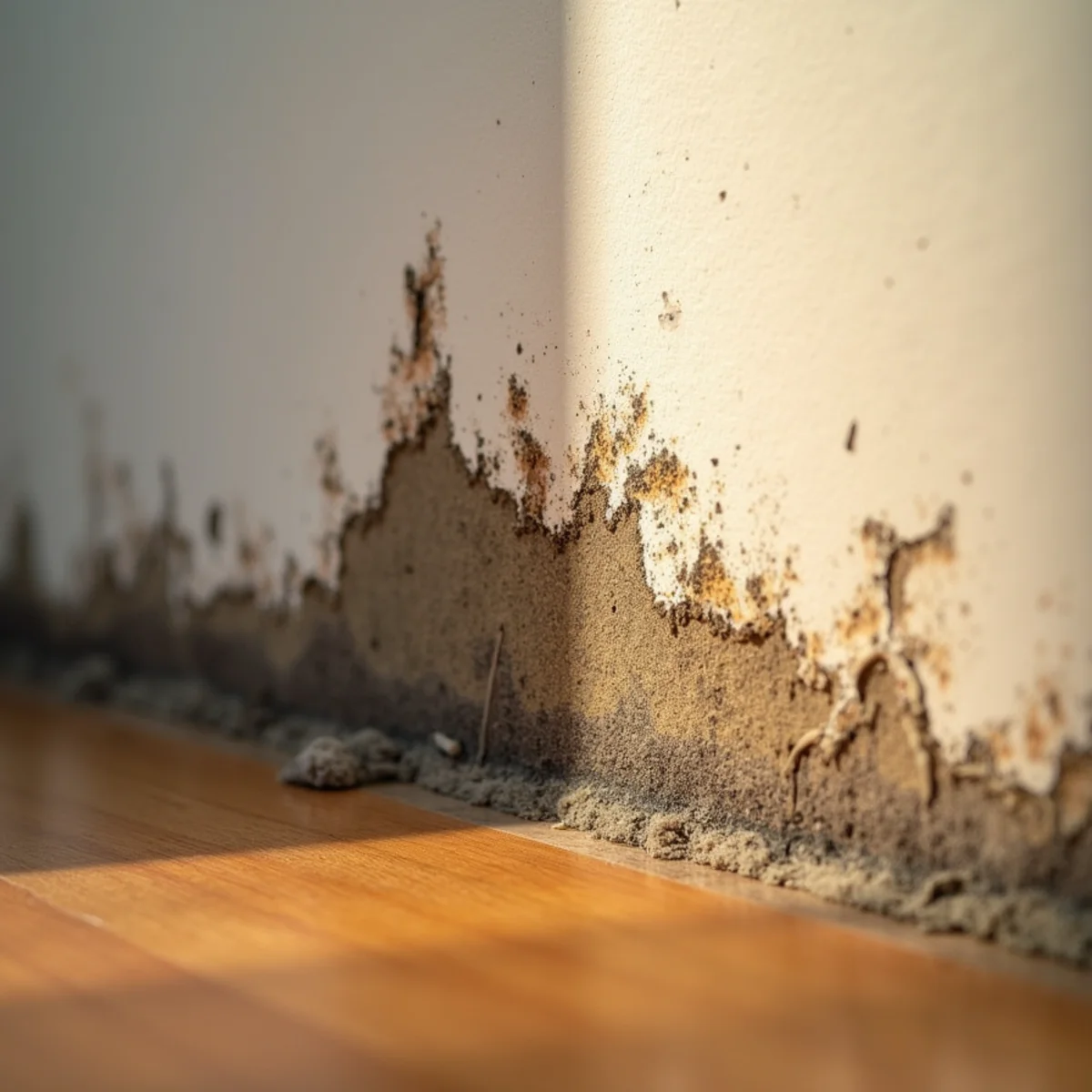
Mold doesn't wait for a convenient time to start growing. Here's the real 24-to-48-hour timeline, and why fast professional drying is the only reliable way to beat it.
Mold can begin growing on wet drywall, baseboards, and carpet padding in as little as 24 to 48 hours after water damage. That number isn't a scare tactic — it's the timeline we plan around on every job, and it's the reason we treat the first day after a leak as the most important one.
Why 24 to 48 Hours, Specifically
Mold spores are already present almost everywhere — in the air, in household dust, on most surfaces. They don't need to be introduced; they need three things to activate: moisture, a food source, and the right temperature. Drywall paper, wood, and dust-covered surfaces all supply the food source, and Southern California's warm year-round climate usually satisfies the temperature requirement without any help. That leaves moisture as the one variable you actually control — and the one that determines whether mold gets a foothold.
The Mold Growth Timeline
- Minutes: Water contacts porous materials and begins wicking into drywall, baseboards, and carpet padding
- Hours 1–24: Materials stay saturated; without active drying, conditions already favor spore germination
- Hours 24–48: Visible colonization can begin in warm, damp, low-airflow spots — corners, behind baseboards, under carpet pad
- Days 3–12: Mold becomes established and spreads across the surface, releasing more spores into the air
- After roughly 12 days: Colonies can mature into a significant remediation project rather than a quick treatment
Where Mold Hides First
Mold rarely starts in plain sight. It tends to establish behind baseboards, under carpet padding, inside wall cavities, and in enclosed spaces like closets and crawl spaces where airflow is already limited. Our crawl space water removal and drywall water damage repair teams check these exact spots on every job, because a room can look dry on the surface while still hiding a problem underneath.
Why AC condensate leaks are a local blind spot
South Orange County sees heavy AC condensate line leaks from May through October, and they're often slow, quiet drips near an air handler in an attic or closet — exactly the kind of leak that goes unnoticed for days instead of hours. That delay is what gives mold its head start. If your system has been running hard all summer, it's worth reading our post on AC condensate line leaks in summer, and our HVAC water leak cleanup service handles this exact scenario.
Why Fast, Professional Drying Is the Real Prevention
A household fan moves air across the surface of wet material, which can make it look and feel dry within a day. But surface-dry isn't the same as dry all the way through — moisture can remain trapped inside drywall or subfloor, which is exactly the environment mold needs. Commercial dehumidification and air movers, set and monitored against actual moisture readings, bring materials down to a normal moisture content instead of just changing how they feel on the outside.
The number that matters
It's not how many fans are in the room — it's how fast structural moisture content comes down to normal. That's what we measure daily until a job is done, not just whether something "looks dry."
Why humidity alone can restart the clock
Even after visible water is gone, ambient humidity left over from a leak can keep materials from ever fully drying, especially in a closed-up house with the air conditioning off during a repair. That's part of why we run dehumidifiers for the space, not just fans aimed at the wet spot — the goal is bringing the whole room's moisture level down, not just the one visibly affected patch of drywall.
Signs Mold May Already Be Growing
- A musty, earthy smell that doesn't go away with the windows open
- Discoloration — black, green, or white patches — on drywall, grout, or wood
- Warped or bubbling drywall or baseboards
- Allergy-like symptoms that improve when you're away from the house
If any of that sounds familiar, our post on signs of hidden mold behind walls goes deeper into what to look for, and our mold inspection and testing service can give you a definitive answer.
What We Do Differently
Our mold removal process follows IICRC S520 standards from start to finish: containment to stop spores from spreading to unaffected areas, HEPA air scrubbing, removal of unsalvageable materials, and post-remediation verification testing before we call the job complete. For more established colonies, our black mold removal team handles the more intensive protocols that severe cases require.
We see this most in older condo and townhome stock around Irvine and Laguna Woods, where humidity gets trapped in tighter, less ventilated units after any kind of leak. If you're inside that 24-to-48-hour window right now, don't wait to see what happens. Call us at (201) 277-9344 — we're available 24/7 and average a 60-minute arrival across Lake Forest, and getting drying equipment running today is what keeps this from becoming a mold remediation job tomorrow.
Frequently Asked Questions
Can mold grow in less than 24 hours?
Does drying the surface stop mold if the material underneath is still wet?
How do I know if mold is already growing behind a wall?
Serving your area: We provide 24/7 water damage restoration in Irvine, Laguna Woods and across South Orange County.