
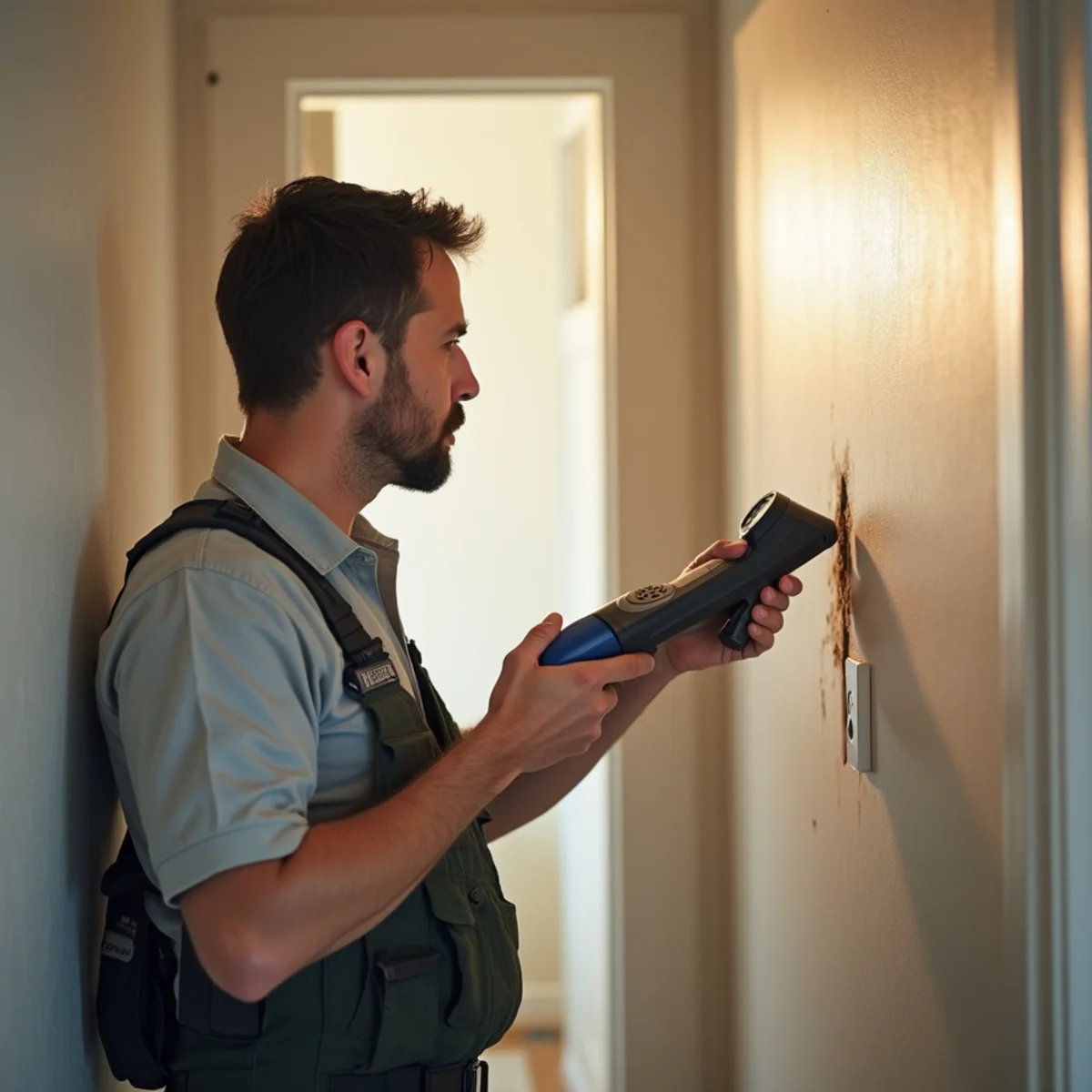
South Orange County's dry climate doesn't stop mold from growing inside a wall that's been wet for a week. Here's how to catch it early.
South Orange County sells itself on sunshine. Low humidity, ocean breeze, close to 280 clear days a year — it's part of why people move here. So when we tell a Lake Forest homeowner they have hidden mold growing behind a wall, the first reaction is almost always the same: "But it's so dry here. How is that even possible?"
Mold doesn't care about your regional climate. It cares about what's happening inside one specific wall cavity, and in South OC that's usually a slab leak seeping into a foundation, an AC condensate line clogging during a hot September, or a slow drip under a kitchen sink that's been ignored for months. Once moisture gets trapped behind drywall with no airflow, it doesn't matter if the patio outside is bone dry — conditions inside that wall are exactly what mold needs.
The Smell Test: Trust Your Nose First
Before you see anything, you'll usually smell it. A musty, earthy, slightly sour odor — the kind that gets stronger near a baseboard, inside a closet, or behind a piece of furniture pushed against an exterior wall — is one of the most reliable early signs of hidden mold. It's not the same as a dusty-closet smell. It's damper, heavier, and it doesn't go away when you open a window.
If You Smell It Before You See It
A persistent musty odor almost always means active moisture and mold growth somewhere nearby, even if the drywall itself looks perfectly normal. Don't paint over it or spray air freshener and hope — that's the signal to start looking, not to mask it.
Visual Warning Signs on Walls, Baseboards, and Trim
Discoloration and Staining
Once mold has been growing for a while, it starts to show. Watch for these color changes on drywall, paint, wallpaper, or baseboards:
- Yellow, brown, or copper-colored rings or blotches, often the shape of a slow, spreading leak
- Greenish-black speckling near baseboards, corners, or around window frames
- Bubbling, peeling, or flaking paint with no obvious cause
- Wallpaper that's lifting, bubbling, or separating from the wall
- Dark shadowing along a baseboard that wipes away and comes right back
Structural and Textural Clues
Sometimes the paint looks fine but the wall itself tells the story. Press gently — literally, with a fingertip — on drywall near a suspect area.
- Soft, spongy, or slightly bowed drywall that gives when pressed
- Baseboards or trim separating or pulling away from the wall
- Flooring that cups or lifts near an exterior or plumbing wall
- Persistent condensation on windows or interior surfaces in one room only
- A wall that feels cool or slightly damp to the touch
Why South OC's 'Dry Climate' Doesn't Protect You
This is the part that surprises people. Mold needs moisture, a food source, and time — and drywall paper, wood framing, and household dust are food enough. The regional humidity outside your house has almost nothing to do with what's happening inside a wall cavity that's been wet for a week. A slab leak in Rancho de los Alisos or a condensate clog in Foothill Ranch creates the exact same microclimate as a flooded basement in a rainy state: dark, warm, damp, and undisturbed.
Health Symptoms That Point Back to the House
Hidden mold often announces itself through your body before it shows up on your walls. If certain symptoms flare up at home and calm down when you're away — at work, on vacation, visiting family — that pattern is worth paying attention to.
- Sneezing, congestion, or a runny nose that worsens indoors
- A cough or sore throat that lingers for weeks with no clear cause
- Headaches or fatigue that improve when you leave the house
- Worsening asthma or allergy symptoms, especially at night
- Skin irritation or itchy eyes that flare up in one specific room
Mold can begin colonizing a wet surface within 24 to 48 hours of water intrusion — long before most homeowners notice a problem.— IICRC S500/S520 water and mold restoration standards
Where Hidden Mold Hides in South OC Homes
In our service area, hidden mold tends to cluster around a handful of predictable spots, based on the water damage calls we run every week:
- Behind kitchen and bathroom walls, around supply lines and drain connections
- Along the base of exterior walls above a slab that has developed a hairline crack or leak
- Inside closets and behind furniture pushed against exterior walls, where airflow is poor
- In attics near AC condensate lines and ductwork during the May–October cooling season
- Around window and door frames where flashing has failed and let water track inward
When It's Time to Stop Guessing and Get It Tested
A little mold on a bathroom tile grout line is a cleaning job. Mold you can't see, can't reach, or keep smelling after cleaning is a different problem. If you're dealing with a musty odor that won't quit, a wall that's stayed damp for more than 48 hours after any kind of leak, or a past water event that wasn't fully dried out, it's time for a real look — not a guess.
Our mold inspection and testing starts with a moisture map of the affected area using infrared and penetrating meters, so we know exactly how far the problem extends before anyone opens a wall. If mold is confirmed, our mold removal team follows IICRC S520 containment and HEPA filtration protocols, and if the mold traces back to an active leak, we handle the water damage restoration side too — drying the structure properly so it doesn't come back.
You don't have to live with a smell you can't place or a stain that keeps spreading. If something in your Lake Forest home feels off, call Water Damage Lake Forest at (201) 277-9344 for a free inspection — we'll tell you honestly whether you're looking at a surface fix or something that needs to come out of the wall.
Frequently Asked Questions
How do I know if it's mold or just mildew?
Can I test for mold myself with a home kit?
Will my homeowners insurance cover mold removal?
Serving your area: We provide 24/7 water damage restoration in Rancho de los Alisos, Foothill Ranch and across South Orange County.