
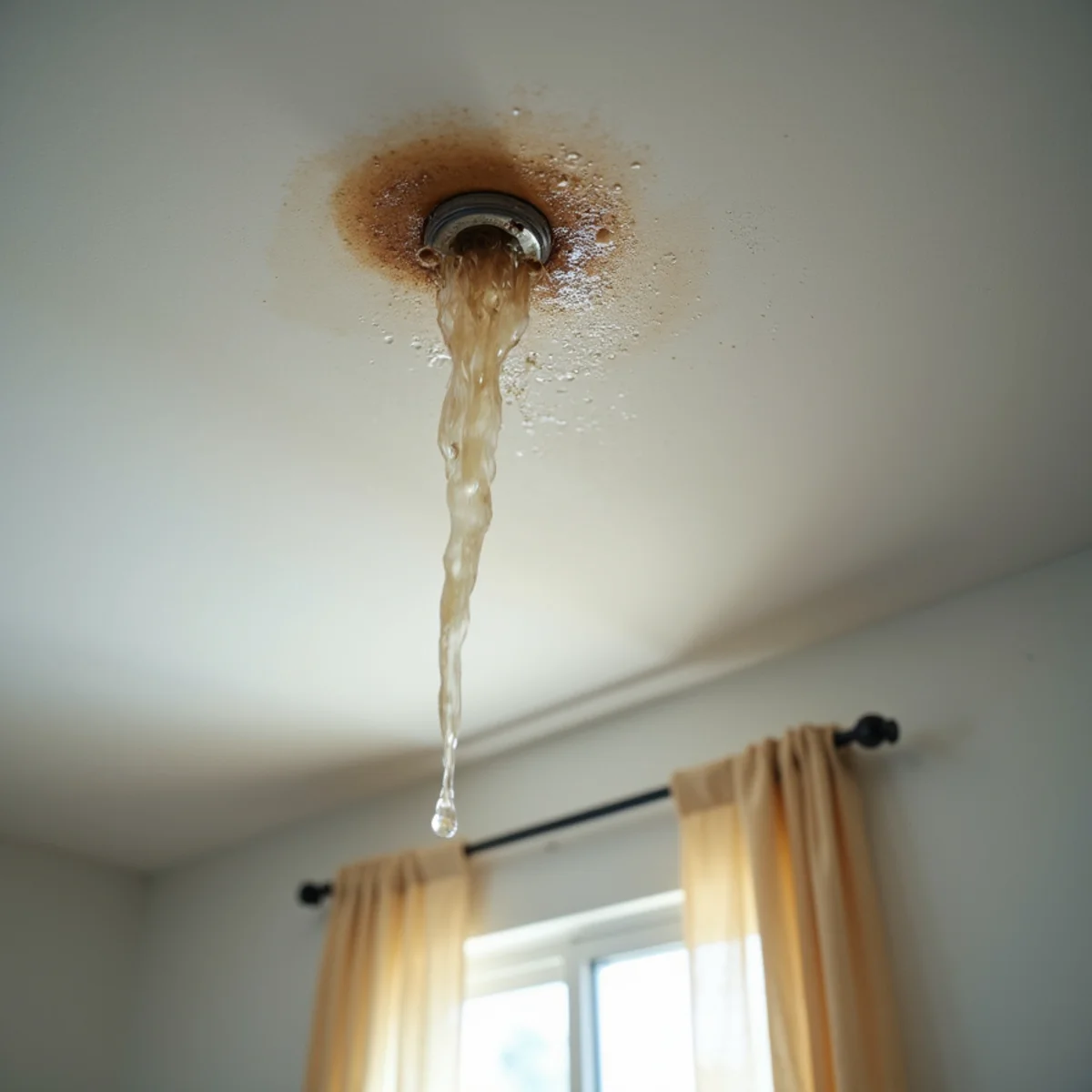
It's not a burst pipe — it's the air conditioner. Here's how a clogged condensate line quietly floods attics and closets every summer.
Ask our dispatch team what the single most common water damage call is between May and October, and the answer surprises most homeowners: it's not a burst pipe or an overflowing toilet. It's the air conditioner. Specifically, a clogged AC condensate line that backs up, overflows, and quietly floods an attic, a closet, or a ceiling for days before anyone notices.
Every air conditioner produces condensate — water pulled out of the air as it cools, the same way a cold glass sweats on a hot day. That water is supposed to drip into a pan and drain harmlessly outside through a small PVC line. When that line clogs, the water has nowhere to go but up and over the pan, straight into whatever is underneath or around the unit.
How a Clogged Line Turns Into a Flood
Condensate lines clog with the same stuff you'd expect in any warm, wet, dark tube that runs for months at a time: algae, dust, and mineral buildup. Once the clog blocks the line, condensate keeps coming — an AC running all day in July can produce several gallons of water — and it backs up over the edge of the drain pan far faster than most homeowners expect.
Where the Water Actually Ends Up
In a lot of South Orange County homes, especially newer construction in Baker Ranch and similar master-planned communities, the air handler sits in the attic or in a closet on the second floor. That means an overflow doesn't just make a small puddle — it drips through ceiling drywall into a bedroom below, soaks the floor of a hallway closet, or runs down into a garage ceiling, often for hours before it's visible from inside the living space.
Why This Is a May-Through-October Problem
Condensate line overflows track almost perfectly with the cooling season. The harder your AC runs, the more condensate it produces, and the more likely a partial clog turns into a full backup. Algae and biofilm also grow fastest in a warm, humid line — exactly what a condensate drain becomes during a South OC heat wave — so the clog itself tends to build up quickest during the months you're relying on the system most.
New Construction Doesn't Mean Immune
It's tempting to assume this is an old-house problem, but newer master-planned communities like Rancho Santa Margarita and Baker Ranch see plenty of condensate overflow calls too. New equipment still produces condensate, new PVC lines still collect algae, and modern homes often route the line through longer, more complicated paths to reach an exterior drain — more elbows and horizontal runs mean more places for a clog to form. The age of the AC unit matters less here than how consistently the line gets cleaned.
Warning Signs Before You See a Stain
A condensate overflow usually gives a few hints before it becomes an obvious ceiling stain:
- A musty smell near vents or inside an upstairs closet
- The AC running constantly but the house not cooling like it used to
- A drain pan under the air handler that's visibly full or has standing water
- A water alarm or float switch sounding, if your system has one installed
- A discolored or sagging patch on a ceiling below an attic unit
- Faint dripping sounds from inside a ceiling or closet wall
The Damage We Typically See From These Calls
Because the air handler usually sits above living space, the damage pattern is fairly consistent: soaked ceiling drywall and insulation directly below the unit, warped or stained closet flooring, and — if it's gone on long enough — damage to a garage ceiling or light fixture underneath. Drywall exposed to a slow drip for days rather than a sudden flood also tends to develop mold faster, since it stays damp without ever fully soaking or fully drying.
Unlike a burst pipe, a condensate overflow rarely announces itself with a sudden puddle. It's usually a slow, steady drip that a homeowner notices only after a ceiling stain has already set in or a closet starts to smell musty — sometimes a week or more after the clog first formed. That delay is exactly why these calls often involve more drywall and insulation replacement than a comparable-sized plumbing leak caught the same day it started.
Prevention: A 10-Minute Check Before Summer Hits
- Flush the condensate line each spring with a cup of distilled vinegar to clear early algae buildup
- Have an HVAC technician inspect and clean the line during annual maintenance
- Install a float switch or water sensor that shuts the AC off automatically if the pan overflows
- Keep the area around the drain pan clear so you'll notice standing water early
- Consider a secondary drain pan with its own alarm for attic-mounted units
If vinegar alone isn't cutting it, a professional line clearing typically uses a wet/dry vacuum at the exterior termination point to pull the clog out, followed by a flush to confirm the line drains freely. For units with recurring clogs, a small camera inspection can reveal a low spot or sagging section of pipe that's collecting standing water and algae faster than the rest of the line — something worth fixing permanently rather than clearing every few months.
The Cheapest Insurance You'll Buy This Year
A float switch costs a fraction of what a ceiling repair does. If your attic or closet unit doesn't have one, ask your HVAC technician to add one at your next service call — it won't stop the clog, but it will stop the flood.
If You're Already Looking at Water Damage
Turn the AC off at the thermostat, and if you can safely access the breaker, shut it off there too — running the system longer just adds more water to a space that's already saturated. Don't wait for the stain to dry on its own; attic and closet spaces trap heat and humidity, which is exactly the environment mold needs to get started fast. Our HVAC water leak cleanup team clears the immediate water and works alongside your HVAC tech to resolve the clog, while our attic water damage and water extraction crews dry the structure before mold has a chance to set in.
If you're in Rancho Santa Margarita, Lake Forest, or anywhere nearby and you've found a wet ceiling, a musty closet, or a drain pan that's overflowed, call Water Damage Lake Forest at (201) 277-9344. We're available 24/7, and getting to it fast is what keeps a ceiling stain from becoming a full drywall replacement.
Frequently Asked Questions
Is AC condensate water damage covered by homeowners insurance?
How fast can mold grow after an AC leak in summer heat?
Can I clear a clogged condensate line myself?
Serving your area: We provide 24/7 water damage restoration in Baker Ranch, Rancho Santa Margarita and across South Orange County.