
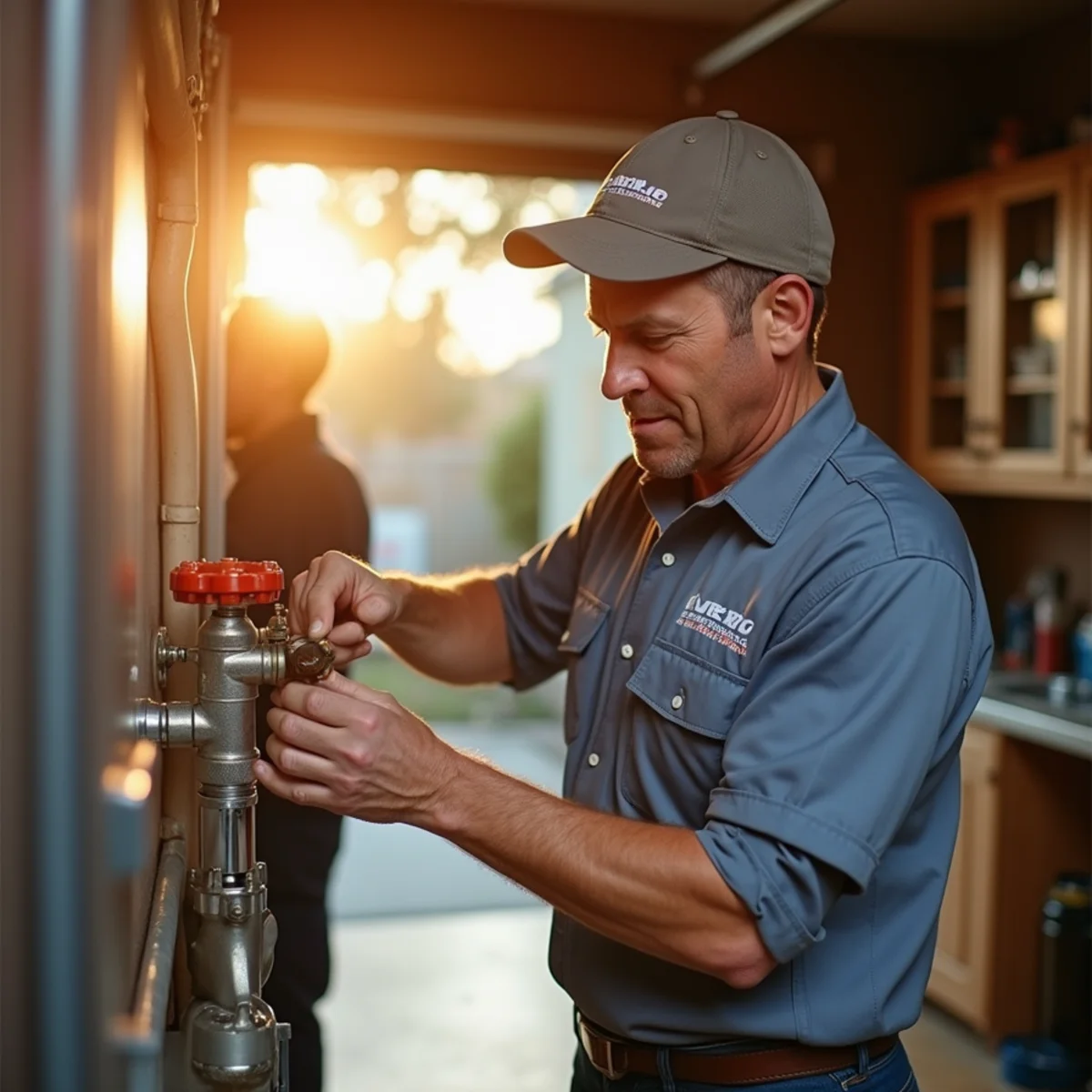
In a flood, the ten seconds it takes to find your main shut-off valve are worth more than anything else you'll do. Here's exactly where to look.
Most homeowners have never touched their main water shut-off valve — until the day they desperately need it. If you're reading this mid-emergency, skip to the section for your home's era below. If you're reading it now, before anything's wrong, that's even better: finding this valve today takes two minutes and could save you thousands later.
Why This Matters More in South Orange County
Most Lake Forest homes sit on slab-on-grade foundations poured over expansive clay soil, with plumbing routed beneath the concrete rather than through an accessible crawl space. You can't just cut into a wall to trace a leak back to its source the way you might in a home with a basement. When something fails, isolating the whole system at the main valve is often the fastest way to stop the damage while the actual source gets diagnosed.
Where to Look, Depending on Your Home's Era
1960s–70s El Toro-era tract homes
In the oldest tracts, expect an older gate valve — a round handle — on the garage wall closest to the street, or just outside near an exterior hose bib. These original valves have often sat untouched for decades and can be stiff or mineral-fused from years of hard water.
1980s–90s copper-plumbed tracts
In this era's homes, the valve is commonly near the water heater or in the laundry area. These tracts are also where pinhole leaks and slab leaks show up most often as copper ages — see our pinhole leak repair and slab leak water damage pages if that's what brought you here.
1990s+ master-planned HOAs and new construction
Newer communities like Foothill Ranch and Baker Ranch typically use a lever-style ball valve inside a garage utility box or dedicated closet — a straight handle that's far easier to operate under stress than an old gate valve.
The Backup: Your Curb Stop
Every property also has a shut-off at the water meter, usually near the curb or sidewalk under a round or rectangular cover. This is your backup when the house-side valve is broken, seized, or simply unreachable — and it's also the only option if the leak is between the meter and your house.
Keep a curb key on hand
You'll need a curb key or a large flathead screwdriver to turn most curb stops. They cost only a few dollars at any hardware store — keep one in the garage where you'll actually remember it.
How to Actually Shut It Off
- Locate the valve — a round handle (gate valve) or a straight lever (ball valve)
- For a gate valve, turn clockwise until it stops; don't force it if it feels seized
- For a ball valve, turn the lever a quarter turn until it sits perpendicular to the pipe
- Check a faucet inside the house to confirm the water has actually stopped
- If the house valve won't turn or won't fully stop the flow, go to the curb stop next
What If the Valve Won't Budge?
Older gate valves can seize from years of mineral buildup, which is common with South Orange County's hard water. Don't force it with pliers or a wrench — a seized valve can snap and turn a manageable leak into a much bigger one. If it won't turn, head straight to the curb stop and call us for emergency water removal or burst pipe cleanup.
Do You Need the Whole House Off, or Just One Fixture?
The main valve isn't always the right call. Most sinks, toilets, and water heaters have their own local shut-off — usually a small oval or lever handle on the supply line right below or behind the fixture. If a toilet is overflowing or a sink supply line is dripping, shutting that one valve off is faster than killing water to the entire house, and it lets everyone else keep using their showers and faucets while you sort out the fix.
When to skip the local valve and go straight to the main
If the water is coming from inside a wall, under the slab, or from a source you can't immediately see — like a pinhole leak spraying behind a cabinet — don't waste time hunting for a local shut-off. Go straight to the main valve. The same applies to a water heater that's actively failing at the tank itself rather than a supply line; shutting off the cold-water inlet at the top of the tank stops the flow faster than trying to isolate it elsewhere.
Test It Before You Need It
Twice a year, do a quick dry run: locate the valve, confirm it still turns freely, and walk anyone else in the household through the same steps. A flood doesn't wait for the one person who knows where the valve is to be home. Pair this habit with our full first-24-hours checklist so everyone in the house knows the whole sequence, not just this one step.
If you've already shut off your water and you're standing in a flooded hallway, stop reading and call us at (201) 277-9344. We're available 24/7 and average a 60-minute arrival across Lake Forest — extraction and drying can start the same hour you call.
Frequently Asked Questions
My main valve is a gate valve and it's stuck. What do I do?
Where is the curb stop usually located?
Should every household member know where the valve is?
Serving your area: We provide 24/7 water damage restoration in Foothill Ranch, Portola Hills and across South Orange County.