
When a pipe bursts inside a shared wall, the CC&Rs — not your gut — decide who pays. Here's how to make sense of it in South OC's HOA-dense market.
South Orange County has one of the highest concentrations of HOA-governed communities in California — condos, townhomes, and attached single-family homes from Laguna Woods to Woodbury to dozens of gated communities in between. So when a pipe breaks inside a shared wall and water starts running into two units at once, the question we hear within minutes isn't "how do we stop this." It's "whose insurance is paying for this."
The honest answer is: it depends, and the details matter more than most owners expect. Who pays for HOA water damage comes down to two things — where exactly the failed pipe sits, and what your specific association's governing documents say about it. There's a general pattern across California condo associations, but it's not universal, and guessing wrong can cost you.
Start With Your CC&Rs, Not Your Gut
Your association's CC&Rs — Covenants, Conditions & Restrictions — are the legal document that defines what counts as 'common area,' what counts as 'exclusive use common area,' and what's considered part of your private unit. Most California condo CC&Rs draw this line somewhere around the interior wall surfaces — often described as 'stud to stud' or 'paint to paint' — but the exact wording varies by association, and it's the document that actually governs the answer, not general assumptions about how condos work.
The General Rule of Thumb (With Real Caveats)
Across most South OC associations, the pattern tends to look like this:
- A pipe that runs inside your unit's walls, serving only your unit, is typically your responsibility under your own policy
- A pipe inside a shared wall that serves multiple units, or runs through a common area like a hallway ceiling or a shared slab, is typically the association's responsibility under the master policy
- Damage to your personal belongings and interior finishes is almost always yours to claim, regardless of whose pipe caused it
- Special assessments the HOA levies afterward to cover its own deductible can become your responsibility too, depending on your governing documents
That's a pattern, not a guarantee. Read your specific CC&Rs, or ask your HOA management company directly, before assuming either way.
Two Insurance Policies Are Almost Always in Play
The Association's Master Policy
This covers the building structure and common areas as defined by your CC&Rs — often a 'bare walls' or 'single entity' version that stops at the studs, meaning it insures the building shell but not what's inside your unit.
Your HO-6 Condo Policy
This covers your unit's interior finishes, personal property, and — critically — often includes loss assessment coverage, which can reimburse you if the HOA passes along a special assessment to cover damage or a deductible from the master policy. If you own a condo or townhome in South OC and don't know whether your HO-6 includes loss assessment coverage, it's worth a five-minute call to your agent.
A Note on Betterments and Upgrades
If you've upgraded flooring, cabinets, or fixtures beyond the unit's original builder-grade finishes, those upgrades may not be covered by the master policy at all — they typically fall under your own HO-6 policy as 'betterments and improvements' coverage. It's a detail that surprises a lot of owners after a claim, when they discover the association's policy only reimburses the builder-standard version of what was damaged, not the upgraded flooring they installed five years ago.
What If You're a Renter, Not an Owner?
Renters in a South OC condo or townhome have their own layer to this. Your landlord's policy, or the HOA's master policy, may cover the structure and the unit's finishes, but it almost never covers your personal belongings — that's what renters insurance is for. If a shared-wall leak damages your furniture, electronics, or clothing, your own renters policy is typically the only place that claim goes, regardless of who's ultimately responsible for the pipe itself.
What Actually Happens the Moment a Shared-Wall Pipe Bursts
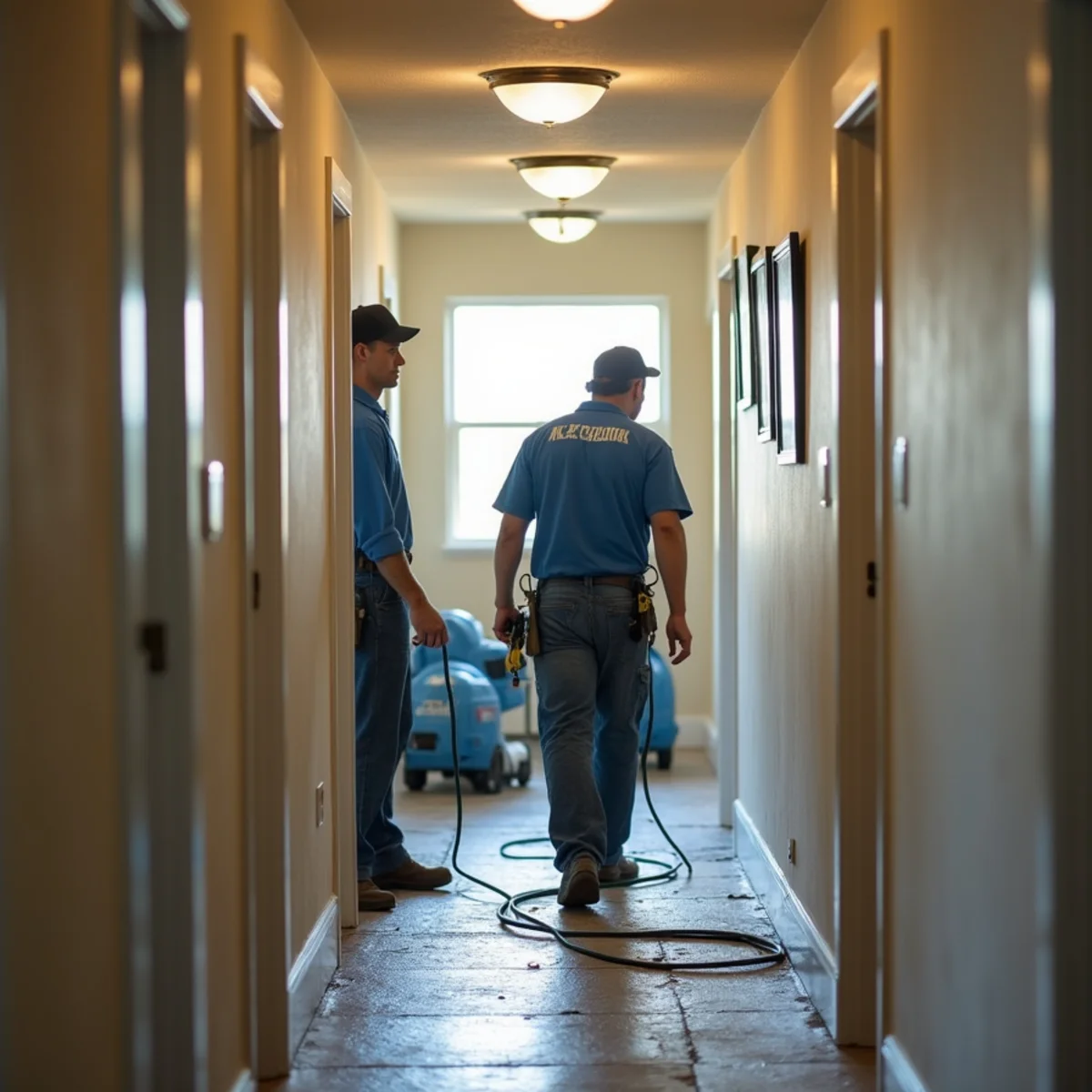
In practice, nobody waits for the CC&Rs to get sorted out before drying the water. Water doesn't pause for a coverage determination, and every hour it sits is another hour of damage spreading into a second or third unit. Our approach is to start emergency water extraction and drying immediately, document everything with photos and moisture readings for both the HOA and any owners involved, and let the paperwork sort out reimbursement afterward, not before.
Dry First, Argue Second
Whoever ends up paying, the damage only gets worse the longer water sits in a shared wall. Get it mitigated immediately, keep thorough documentation, and let the HOA, the insurers, and the CC&Rs sort out responsibility in parallel — not as a precondition to starting the work.
Why This Comes Up So Often in South Orange County
This isn't a rare scenario here. Communities like Laguna Woods, with its dense, multi-unit senior housing, and condo-heavy districts like Woodbury in Irvine, have far more shared walls, shared plumbing chases, and shared slabs than a typical single-family tract. More shared infrastructure means more situations where one failed pipe affects multiple households and multiple insurance policies at once.
What to Do When It Happens to You
- Shut off water at the unit's shutoff valve if you can access it safely
- Notify your HOA management company or board immediately, even outside business hours
- Call your own insurance too, even if you believe it's clearly the association's issue — don't assume you're excluded from the process
- Photograph and video the damage before any cleanup begins
- Start water extraction and drying right away regardless of who's ultimately responsible
- Save every email and message between you, the HOA, and any insurers involved
If responsibility ends up disputed, our insurance claims assistance team helps document the loss clearly enough that it doesn't become your problem to sort out alone, and our condo water damage and HOA water damage teams are used to working with property managers and multiple owners on the same claim at once.
A shared-wall leak in a South OC condo or townhome moves fast, and the coverage questions can wait — the water can't. Call Water Damage Lake Forest at (201) 277-9344 any time, day or night, and we'll start mitigating the damage while you and your HOA sort out who's paying for what.
Frequently Asked Questions
Does the HOA have to fix water damage inside my unit?
What is HO-6 loss assessment coverage, and do I need it?
Who pays if the leak comes from my neighbor's unit?
Can restoration start before the HOA and insurance figure out who's responsible?
Serving your area: We provide 24/7 water damage restoration in Laguna Woods, Woodbury and across South Orange County.