
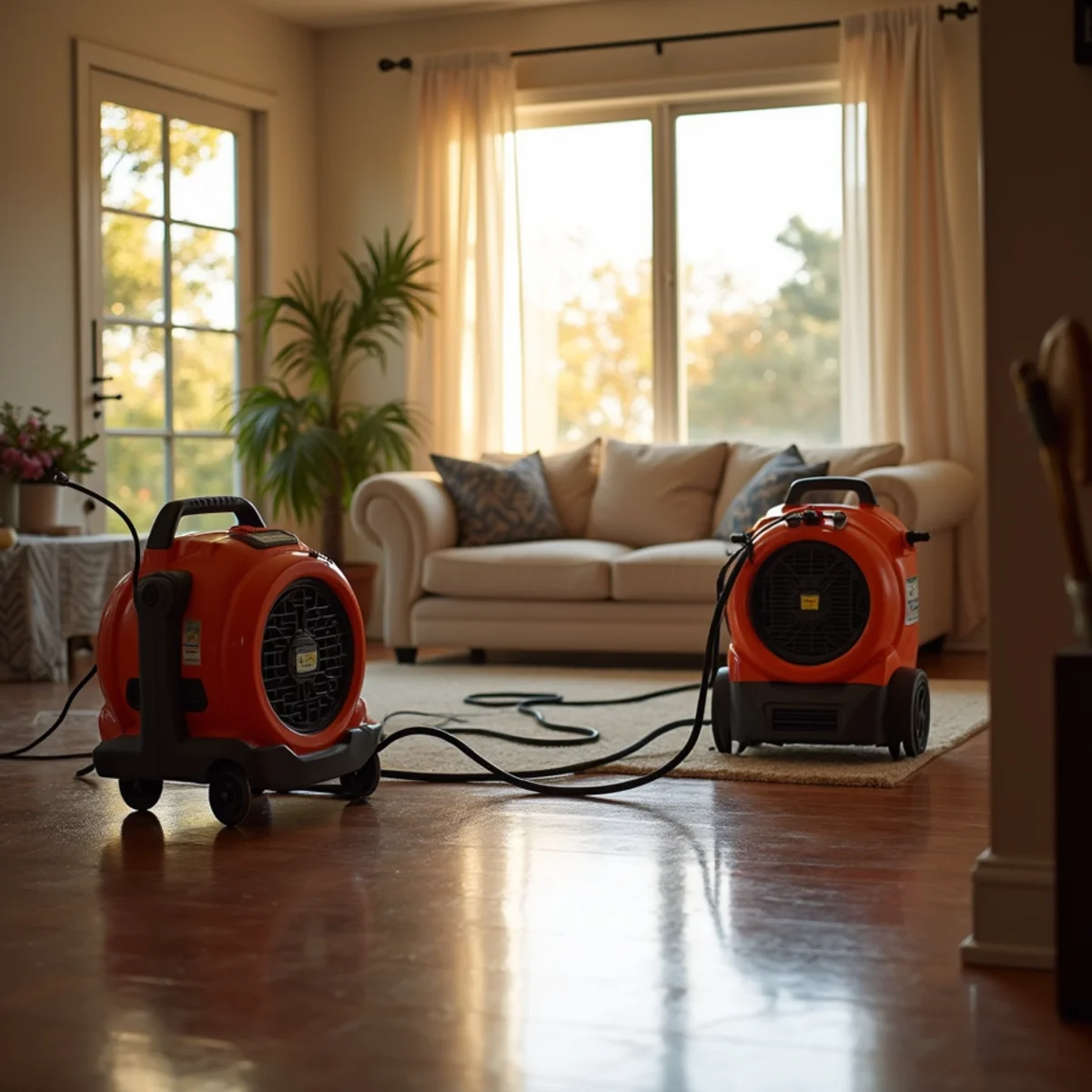
Extraction, drying, cleaning, restoration — here's what actually happens at each stage of professional water damage restoration, and why it's measured, not guessed.
Water damage restoration looks chaotic from the homeowner's side — strangers in your living room, loud machines running around the clock, a house that smells different for a week. From our side, it's a defined process with five stages, each one following IICRC S500 standards, and each one building on the last. Understanding the stages makes the whole thing less overwhelming, and it helps you know what to expect if you're ever standing in a flooded room waiting for help.
Step 1: Inspection and Damage Assessment
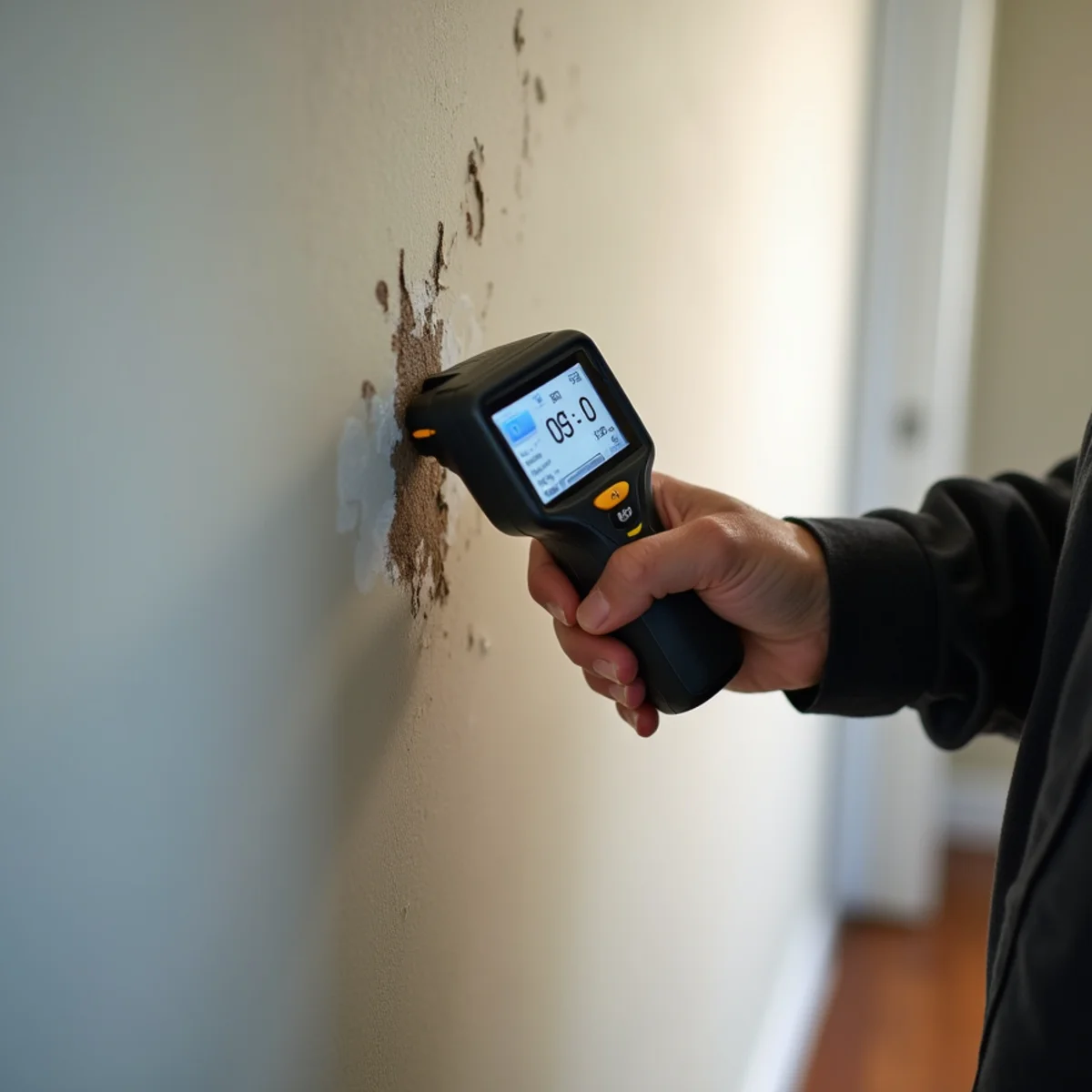
Everything starts with a walkthrough. Before any equipment comes off the truck, a technician identifies the water source, categorizes the water — clean, gray, or contaminated black water, per IICRC guidelines — and uses moisture meters and infrared imaging to map exactly how far the water traveled, including behind walls and under flooring where it isn't visible. This assessment becomes the basis for the restoration plan and the documentation your insurance company will want to see.
Step 2: Water Extraction
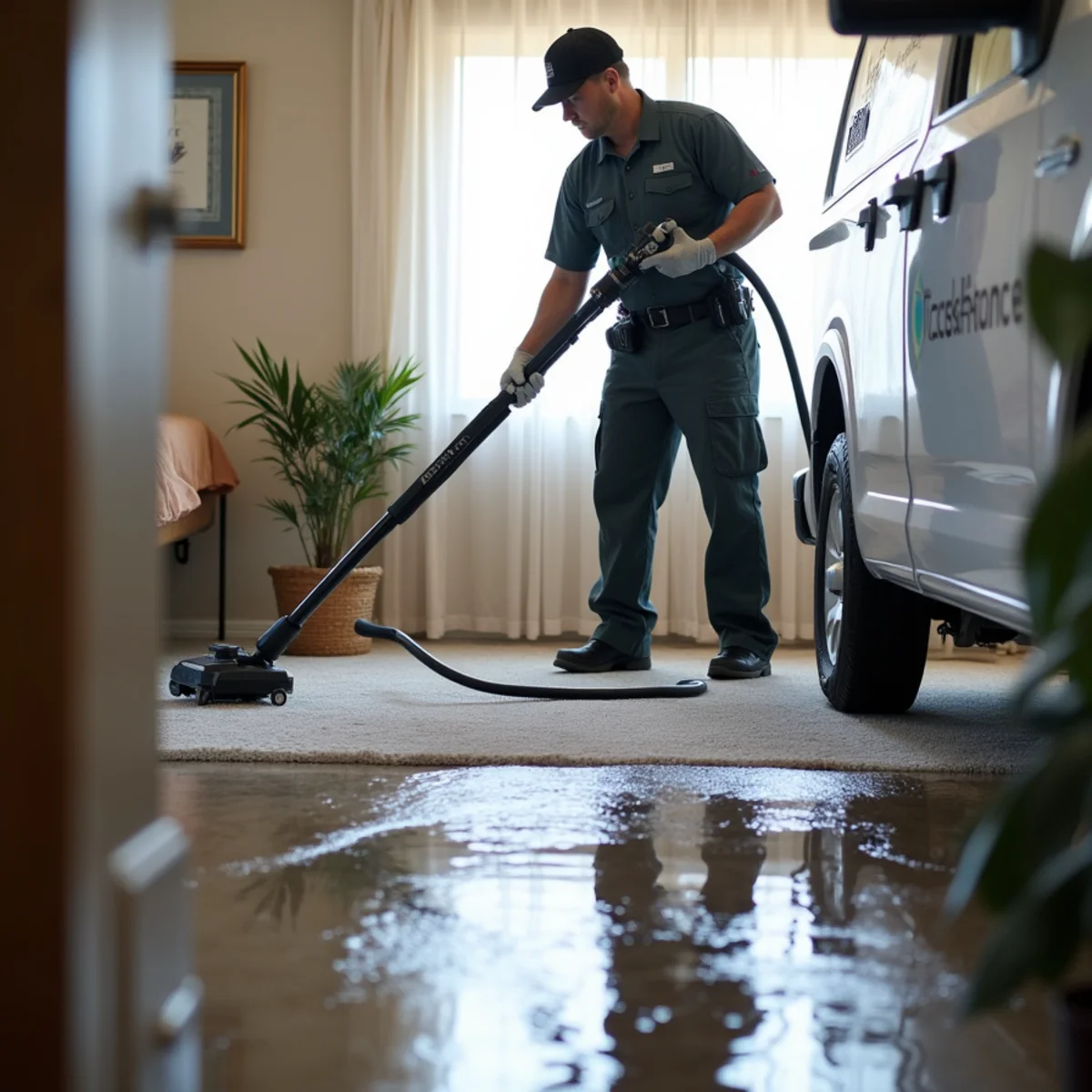
Once the source is controlled, the priority is getting standing and absorbed water out as fast as possible. Truck-mounted extraction units handle large volumes quickly; portable extractors reach tight spaces like stairs and closets. Every hour water sits on flooring or inside a wall cavity is an hour it keeps spreading and soaking deeper into materials, so this step typically starts within the first hour of arrival. Our water extraction crews pull as many gallons out mechanically as possible before drying equipment ever goes in — mechanical extraction is dramatically faster than evaporation.
Step 3: Drying and Dehumidification
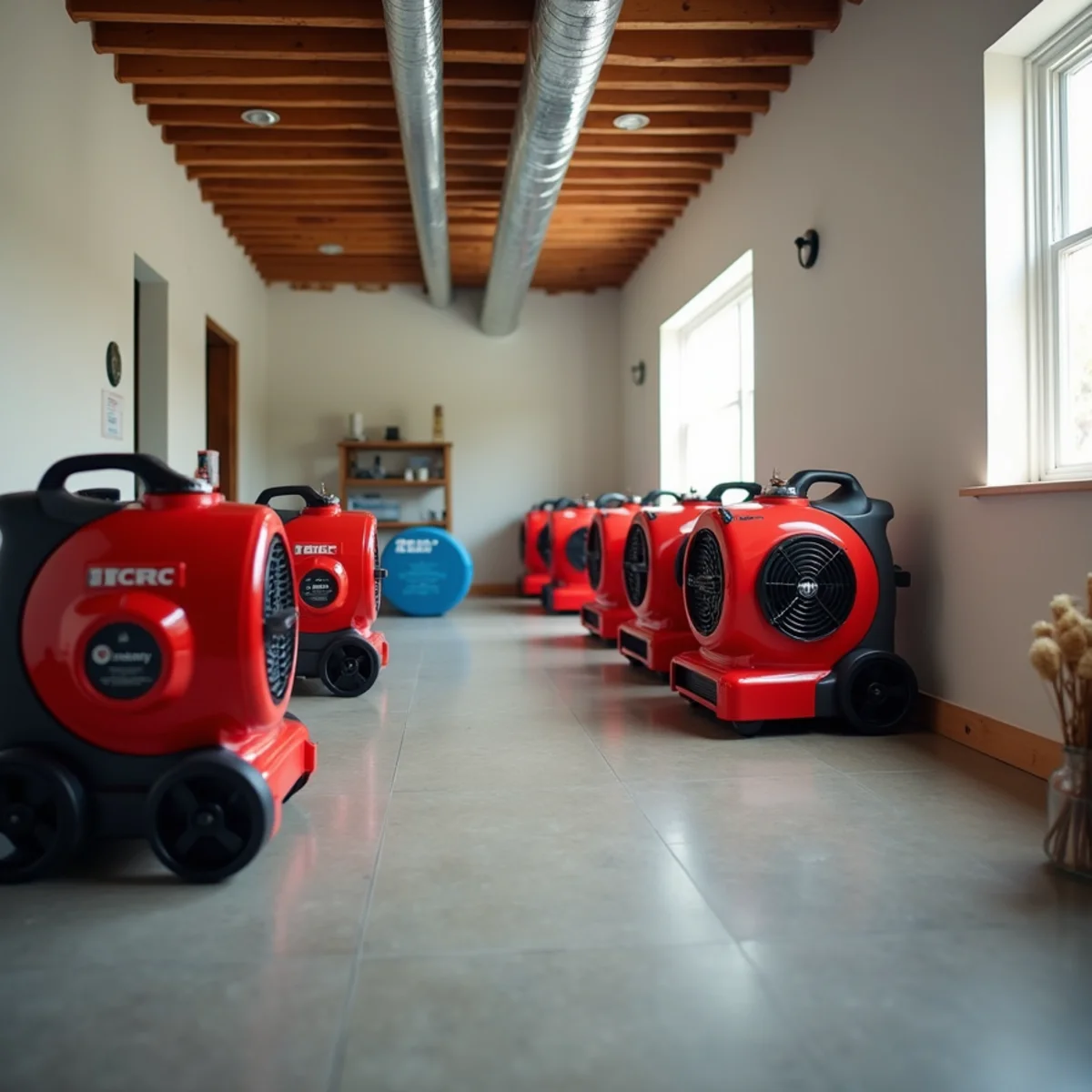
This is the step people underestimate the most. Opening windows and running a box fan does not dry a house — it just moves damp air around. Professional drying uses a calculated placement of air movers to create controlled airflow across wet surfaces, paired with commercial dehumidifiers that pull the moisture those air movers release out of the air entirely. A technician takes moisture readings daily, comparing wet materials to a dry standard from an unaffected area of the house, and equipment stays in place until every reading matches. Most residential jobs reach that point in three to five days; larger or more saturated losses take longer. Our structural drying process is what actually determines whether your walls and subfloor come back to normal or quietly grow mold behind a repainted wall.
The Equipment Behind Each Stage
None of this works without the right tools, calibrated and used correctly:
- Penetrating and non-penetrating moisture meters for accurate readings on drywall, wood, and concrete
- Infrared cameras to spot moisture behind surfaces without cutting into them
- Truck-mounted and portable extraction units for pulling bulk water fast
- Low-grain refrigerant and desiccant dehumidifiers, matched to the size and humidity of the space
- Axial air movers positioned to create a directed drying pattern, not just random airflow
- HEPA air scrubbers for jobs involving contamination or mold risk
Step 4: Cleaning, Sanitizing, and Odor Control
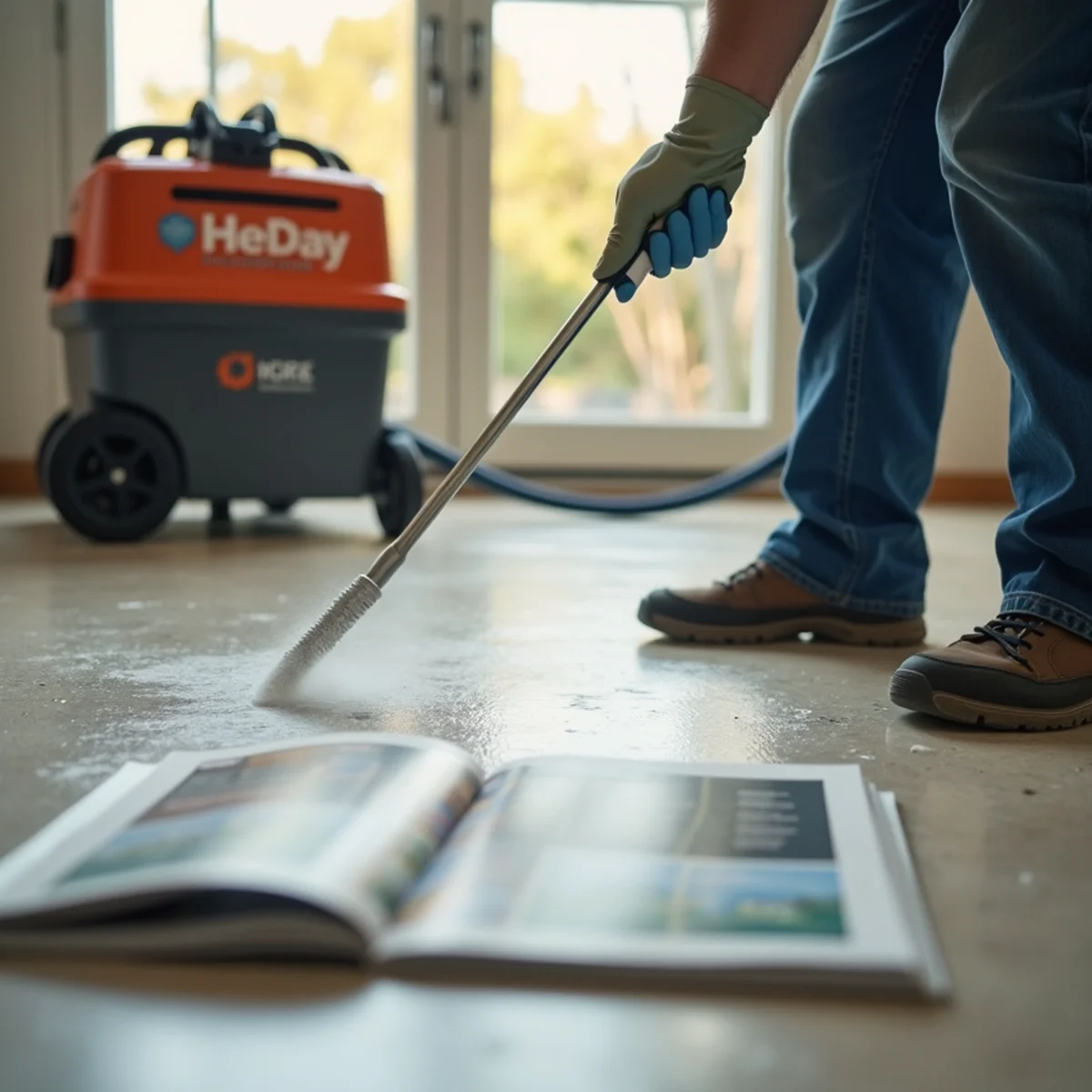
Once materials are dry, attention shifts to anything the water touched — surfaces, contents, and, for gray or black water losses, the structure itself. This can mean antimicrobial treatment on framing and subfloor, HEPA vacuuming to remove settled contaminants, and, if odor has set in, equipment like hydroxyl generators to neutralize it at the source rather than mask it. Category 2 and 3 water losses get more intensive sanitizing and disinfection per IICRC S500 protocols, since contaminated water carries a real health risk beyond the visible damage.
Step 5: Restoration and Repairs
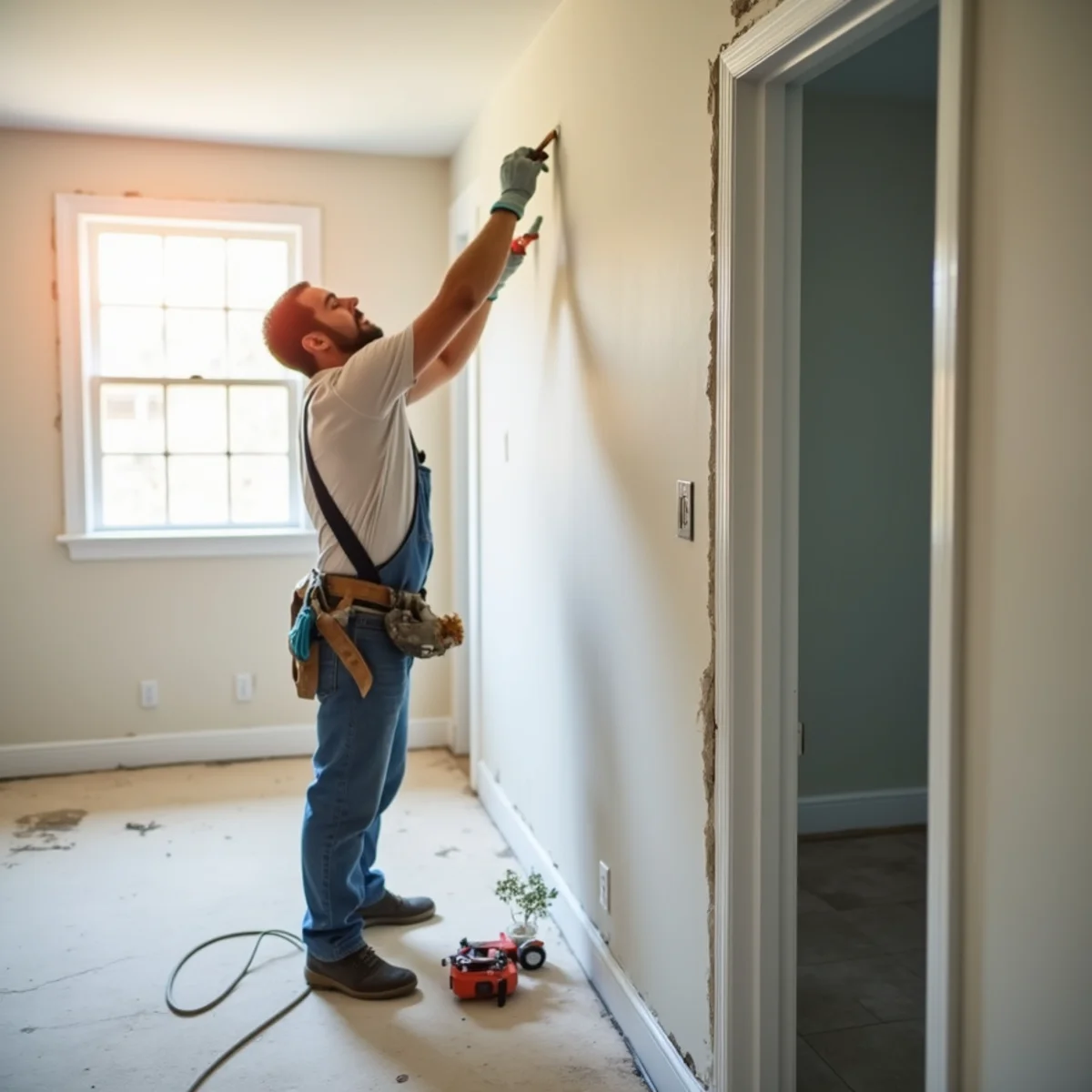
The final stage rebuilds whatever had to come out — drywall, flooring, baseboards, cabinets, insulation. This is the difference between a company that dries your house and hands you a list of contractors, and one that finishes the job. Handling reconstruction with the same team that did the drying means nobody has to re-explain the damage history to a new contractor, and nothing gets rebuilt before the moisture readings confirm it's actually dry underneath.
Where Mold Fits Into the Timeline
If materials stayed wet for more than 48 hours before drying began, or the water was categorized as gray or black, mold risk goes up regardless of how well the drying goes afterward. In those cases, a parallel mold removal assessment often runs alongside the drying process rather than waiting until after reconstruction — catching it early is far less disruptive than finding it behind new drywall six months later.
How Long Does the Whole Process Take?
Extraction typically happens the same day you call. Drying runs three to five days for most residential losses, longer for larger areas or slow-discovered leaks. Reconstruction timelines vary the most — a single bathroom might take a week, while a whole first floor with cabinets and hardwood flooring can take several weeks. We give you a realistic timeline at each stage rather than a single number upfront, since drying time genuinely can't be predicted until we see how far the water traveled.
Why IICRC Certification and S500 Standards Actually Matter
Anyone can point a fan at a wet carpet. IICRC certification — WRT, ASD, AMRT — means technicians are trained to specific, documented standards for water damage (S500) and mold remediation (S520), and it means the drying process is measured with instruments rather than judged by eye. That documentation is also what makes a claim defensible if your insurance adjuster questions the scope of work — every moisture reading and every day of equipment placement is recorded.
Whether you're dealing with active flooding right now or just want to understand what a restoration company should actually be doing at your Irvine or Mission Viejo home, call Water Damage Lake Forest at (201) 277-9344. We'll walk you through exactly where your specific loss falls in this process and what to expect next.
Frequently Asked Questions
How do you know when a house is actually dry?
Do I need to leave my home during the restoration process?
How much does water damage restoration typically cost?
What's the difference between restoration and repair?
Serving your area: We provide 24/7 water damage restoration in Irvine, Mission Viejo and across South Orange County.